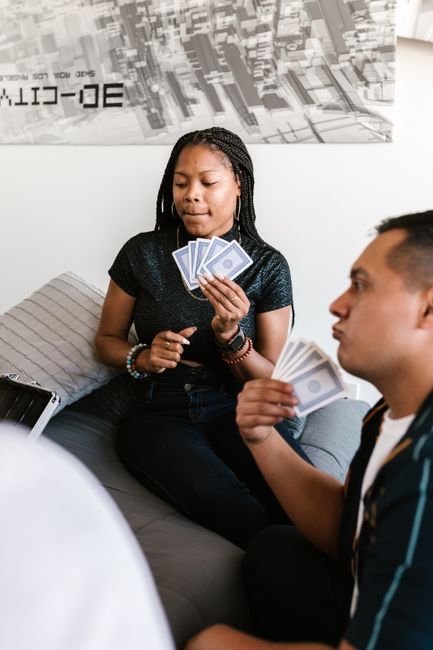
Ask ten regular players what separates a winning session from a losing one and you'll get ten different answers. Luck. Bankroll size. A hot streak. The truth is messier and more interesting than any of that. After years of watching how people actually play — slots, poker, sports betting, the whole spread — the pattern that stands out isn't talent or destiny. It's discipline, understanding the math, and knowing exactly why you're sitting down in the first place.
This isn't a lecture about quitting gambling. It's the opposite. It's a look at how the smartest players approach the games, why most casual players bleed money without realizing it, and how a few small shifts in thinking change everything. For a closer look, OK68 has helpful details.
The House Edge Is Real — and It's Not the Enemy
Every game in a casino, online or brick-and-mortar, is built on a mathematical advantage for the operator. That's not a flaw; it's the business model. A slot machine might return 94% to 96% of all money wagered over millions of spins, meaning the house keeps 4% to 6% long-term. European roulette runs at roughly 2.7% edge. Blackjack with basic strategy can drop below 1%. Poker is different entirely because you're playing against other people, not the house — the casino just takes a rake.
Here's the part most people miss: the house edge doesn't guarantee you lose tonight. It guarantees you lose slowly if you play long enough at the same stakes. A player who spins $1,000 through a 95% RTP slot machine has an expected loss of $50, but the variance means they could walk away up $400 or down $300. The edge only bites over volume. That's why short sessions with clear stop-losses are far kinder to your wallet than marathon grinds.
Slots: Volatility Matters More Than RTP
Walk into any casino forum and you'll see people obsessing over RTP percentages. Useful, but incomplete. The number that actually shapes your experience is volatility — how the payouts are distributed.
- Low volatility slots pay small amounts frequently. Think Starburst, Blood Suckers. Great for stretching a bankroll, boring for thrill-seekers.
- Medium volatility balances both. Book of Ra sits here for many players.
- High volatility slots like Bonanza or Money Train can go hundreds of spins without a meaningful win, then drop a 5,000x payout. Brutal on a short bankroll, thrilling on a deep one.
A slot with 96% RTP and extreme volatility will feel completely different from a 96% RTP slot with low variance, even though the long-term math is identical. Match the volatility to your bankroll, not your mood. If you've got $50 and an hour, a high-volatility slot is basically a lottery ticket.
Poker Is the Only Game Where You Can Actually Win Long-Term
This is the uncomfortable truth most casino content avoids: in pure chance games, no strategy overcomes the house edge. Poker is the exception because your opponents make mistakes, and those mistakes have measurable dollar values.
A weak player who calls too much, chases draws without odds, and never bluffs is literally donating money to the table. If you can identify them and play solid ranges, you profit. That's why professional poker still exists after decades. It's also why poker is harder than it looks:
- Position is everything. Acting last gives you information everyone else lacks.
- Bankroll management is non-negotiable. Pros keep 20-50 buy-ins for the stakes they play. Amateurs sit with their rent money.
- Game selection beats hand selection. A mediocre player at a soft table wins more than a great player at a tough one.
- Emotional control decides sessions. Tilt costs more money than bad cards ever will.
If you're not willing to study ranges, pot odds, and opponent tendencies, poker will treat you worse than slots. Slots at least lose slowly and predictably.
Sports Betting: The Line Is Smarter Than You
Casual bettors love a good story — the underdog, the revenge game, the team "due for a win." The market doesn't care about narratives. Modern sportsbooks use algorithms and sharp money to set lines within a fraction of a percent of true probability. Beating the closing line consistently is the only real proof of an edge.
What actually moves the needle for bettors:
- Line shopping. A half-point in an NFL spread can swing your long-term ROI by several percentage points.
- Closing line value (CLV). If you consistently get better odds than the closing line, you're likely a winning bettor even during losing weeks.
- Specialization. Betting every sport is a fast track to mediocrity. Pick a niche — a league, a market, a specific team discipline — and learn it deeply.
- Bonus abuse is a trap. Chasing reload bonuses you can't clear profitably is worse than not betting.
Parlays and same-game multis are where bookmakers make their fattest margins. Fun, yes. Profitable, almost never.
Bankroll Rules That Actually Work
Nobody sticks to abstract advice like "only gamble what you can afford to lose." Make it concrete. Divide your total gambling budget into session units — say 10-20 buy-ins or 100-plus spins per session. When a session's gone, it's gone. Don't reach into tomorrow's money.
Three rules separate recreational players who last from those who burn out:
- Set a session loss limit before you start and honor it even when you're "sure" the next spin is the one.
- Take wins out occasionally. Money that never leaves the account never really counts as won.
- Track everything. A simple spreadsheet of deposits, withdrawals, and session results tells you more about your true edge than any gut feeling.
Players who track their results almost always discover their instincts were wrong — they bet bigger when losing, chased bonuses that cost more than they paid, or misjudged which games suited them. Numbers don't lie, and neither do your net deposits at year-end.
The Bottom Line
iGaming isn't a meritocracy. A disciplined grinder can still lose money to variance, and a clueless first-timer can hit a jackpot on their third spin. But over hundreds of sessions, the math drags everyone toward their true expected value — and that value is shaped almost entirely by the choices you make before the first bet. Choose your games based on volatility and edge, not marketing. Track your bankroll honestly. Treat poker and betting as skill arenas and pure chance games as entertainment with a price tag. Do that and you'll never confuse luck with strategy again. That confusion, more than any house edge, is what empties accounts.


Félix Lengyel 01.01.2024 at 8:00
You guys have put so much work, effort, and time while designing this awesome theme I can see that passion when I incorporated it into my website.
ReplyJoseph Crawford 01.01.2024 at 8:00
The only thing I LOVE more than this theme and it’s incredible options is the support team! They are freaking amazable!
ReplyPatsy Hamlin 01.01.2024 at 8:00
Outstanding quality in this theme, brilliant Effects and perfect crafted Code. We absolutely love it and can highly recommend DynamicLayers!
Reply